
Why Information Reliability and Discussion Styles Differ Between Anonymous Boards and Registration-Based Communities
 0
0
 0
0
A community does not become reliable simply because it requires registration. It also does not become unreliable simply because people post anonymously.
What matters is the identity system behind the discussion. A temporary anonymous post, a persistent nickname, a verified employee account that hides the person’s name, and a public profile all create different incentives. They change what readers can verify, how much social risk the writer feels, and what happens when someone repeatedly posts false or abusive content.
Research on selective online identity shows why the difference is not binary. Full anonymity can reduce fear of judgment, but it may also remove useful social context and lower the cost of disruptive behavior. A system that reveals only selected information can preserve privacy while giving readers enough context to respond more appropriately.
Identity Systems Change What Readers Can Verify
Many communities described as “anonymous” still use accounts, internal identifiers, workplace verification, or persistent nicknames. Likewise, registration does not necessarily mean that readers can see a real name.
| Identity structure | What readers can evaluate | Main limitation |
|---|---|---|
| Temporary anonymous post | The wording and evidence in that individual post | No visible record of earlier accuracy or behavior |
| Persistent pseudonym | Previous posts, corrections, subject knowledge, and conduct | The offline identity and credentials may remain unknown |
| Verified but anonymous account | A limited fact such as workplace or professional history | Verification does not prove that each claim is correct |
| Public or detailed profile | Activity history, stated background, badges, and past contributions | Profile information and popularity can create misplaced trust |
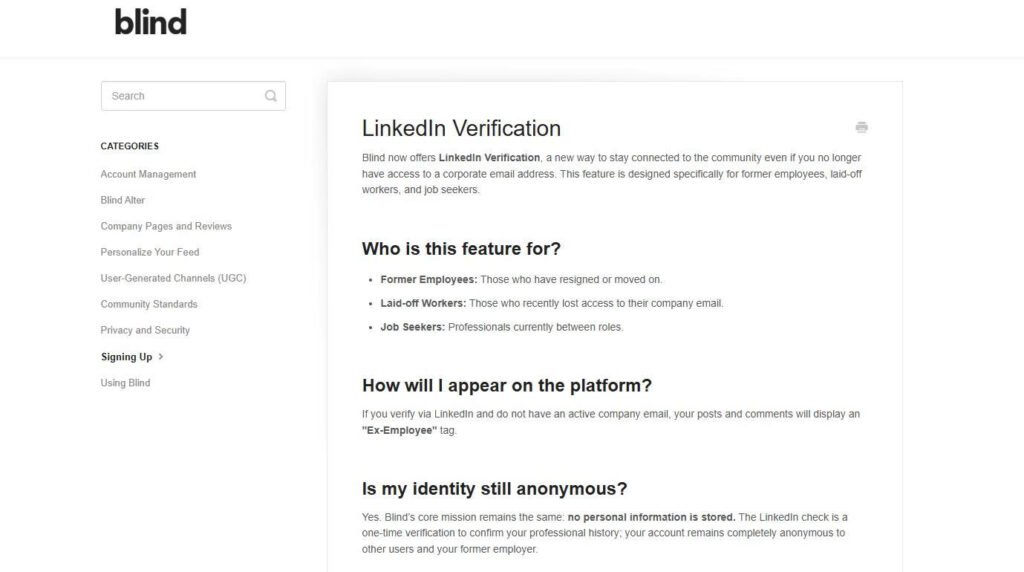
Blind demonstrates the third model. It verifies professional history while allowing the account to remain anonymous to other users. Its current LinkedIn verification process can display an “Ex-Employee” tag without connecting the person’s real identity to their public activity.
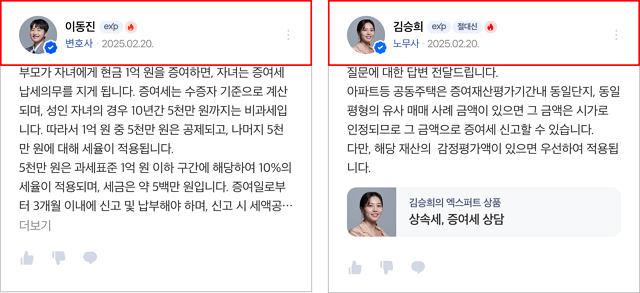
NAVER Knowledge iN uses a different approach. Its responder profile cards and profile pages can display background information, activity history, badges, answers, and other signals intended to help readers understand who produced the response. These details provide context, but they do not independently prove that a particular answer is accurate.
The useful distinction is therefore not simply anonymous versus registered. It is whether the same contributor can be recognized over time and what parts of that contributor’s history can be inspected.
Discussion Style Reflects the Cost of Being Wrong – or Being Recognized
Temporary anonymity lowers the social cost of speaking. This can help people discuss workplace conflict, financial difficulty, health concerns, discrimination, personal failure, or unpopular opinions without attaching the story to a long-term profile.
The same protection can also make insults, exaggeration, rumor-sharing, and deliberate provocation less costly. A person can post an unsupported claim, disappear, and return under another identity. This does not mean that every anonymous conversation becomes hostile. The topic, rules, moderation, and local culture still matter.
Persistent accounts create a different pressure. A member who has built a recognizable history may spend more time explaining an answer, citing sources, and correcting mistakes because later readers can connect the new post to earlier activity. However, persistent reputation can also make discussions more guarded. New members may hesitate to challenge established users, while popular opinions can receive support because of who posted them rather than because the evidence is stronger.
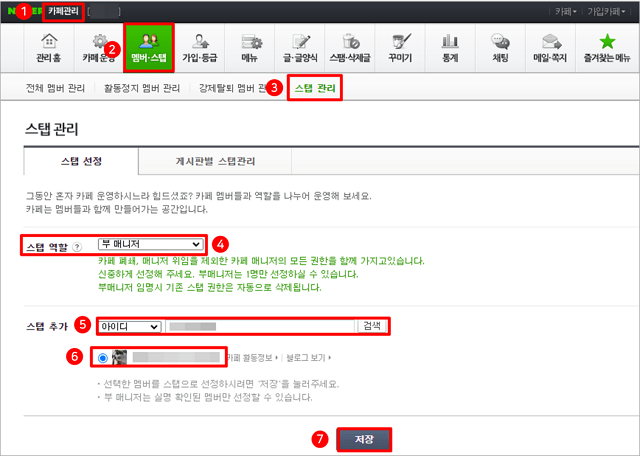
Moderation can change these outcomes on either type of platform. Blind combines community flagging with human review and can restrict accounts for repeated or serious violations. NAVER Cafe gives managers and delegated staff tools for spam control, notices, post removal, comment deletion, and member suspension. These examples show that anonymity and moderation are separate design choices: an anonymous platform can be actively managed, while a registered community can still be poorly moderated.
Reputation Provides Context, but Evidence Decides the Claim
A long account history is useful when it shows that a contributor regularly discusses the same subject, corrects errors, and provides sources. It should influence how carefully you read a post, not replace verification.
The same rule applies to anonymous content. A post without a visible author history can still be valuable when it includes an original document, a reproducible procedure, a complete screenshot, or information that several independent sources confirm.
| Signal | What it can tell you | What it cannot prove |
|---|---|---|
| Old account or high activity | The user has participated for a long time | The current claim is accurate |
| Verified company or profession | The person has some connection to that organization or field | They have direct knowledge of the specific event |
| Many likes or recommendations | The post fits community expectations or interests | The evidence has been independently checked |
| Several similar comments | Other users report a similar experience | The comments come from independent people |
| Screenshot or document | The claim may have supporting material | The material is complete, current, or shown in context |
| Accepted or selected answer | The response helped the original questioner | It applies to every version, region, or user |
Registration also does not eliminate manipulation. Research across several discussion communities has documented “sockpuppet” behavior in which one person operates multiple accounts, sometimes making those accounts interact with or support one another. Apparent agreement among registered users may therefore be weaker than it looks. arXiv
For an important claim, begin with the evidence rather than the username. Confirm the date, software version, country, quoted passage, original source, and later corrections. When several people repeat the claim, determine whether they have separate evidence or are all referring to the same original post.
Sensitive Sharing Requires More Than a Hidden Username
Anonymity from other community members is not the same as complete privacy. A platform may still process account details, device data, verification records, reports, or other technical information according to its own policy.
Blind, for example, states that verified accounts remain anonymous to other users. It also warns that an employer monitoring company email could potentially see that a verification code was requested, although that alone does not prove an account was completed. Blind separately prohibits disclosure of proprietary or confidential company information.
Before sharing a sensitive experience, remove details that are not necessary to understand the problem. A workplace story may become identifiable through the combination of team size, project date, job title, location, and a distinctive quotation even when the person’s name is omitted.
Screenshots require the same care. Hide names, profile photographs, email addresses, order numbers, internal URLs, employee IDs, authentication codes, medical details, and information about uninvolved people. Do not upload confidential company documents merely because the board allows anonymous posting.
The safer venue is not automatically the most anonymous one. For harassment, mental-health support, workplace disputes, or other vulnerable situations, a pseudonymous community with clear moderation and privacy controls may offer better protection than an unmoderated board where posts can be copied, mocked, or redistributed.
For medical, legal, investment, security, or employment decisions, community accounts should be used to discover questions and experiences. The final decision should rely on current official information or a qualified professional.
The Best Community Depends on the Question
Anonymous and registration-based communities are useful for different stages of research.
| What you need | Useful starting environment | How to use the information |
|---|---|---|
| Early reports or current public sentiment | Active anonymous or pseudonymous board | Treat posts as leads and verify them elsewhere |
| Candid workplace experiences | Verified-anonymous professional community | Look for repeated patterns, not proof of a specific allegation |
| Detailed technical troubleshooting | Persistent-account specialist forum | Match model, version, operating system, and final outcome |
| Long-term hobby research | Searchable registered community | Use account history and archives, then confirm important facts |
| Sensitive peer support | Moderated pseudonymous group | Share only the details needed to receive support |
| Decision-critical facts | Official source or qualified professional | Use community discussion only as supplementary context |
A quick review should focus on several real threads rather than the platform’s description. Look at whether factual claims receive source-based replies, whether corrections remain visible, whether moderators explain removals, and whether unpopular evidence is answered rather than attacked.
Also examine how the community handles uncertainty. A useful contributor says when something is an estimate, a personal experience, or an unconfirmed report. A weak discussion turns all three into the same kind of “fact.”
The most reliable rule is:
Use identity history to understand the speaker, moderation to understand the environment, and evidence to judge the claim.


